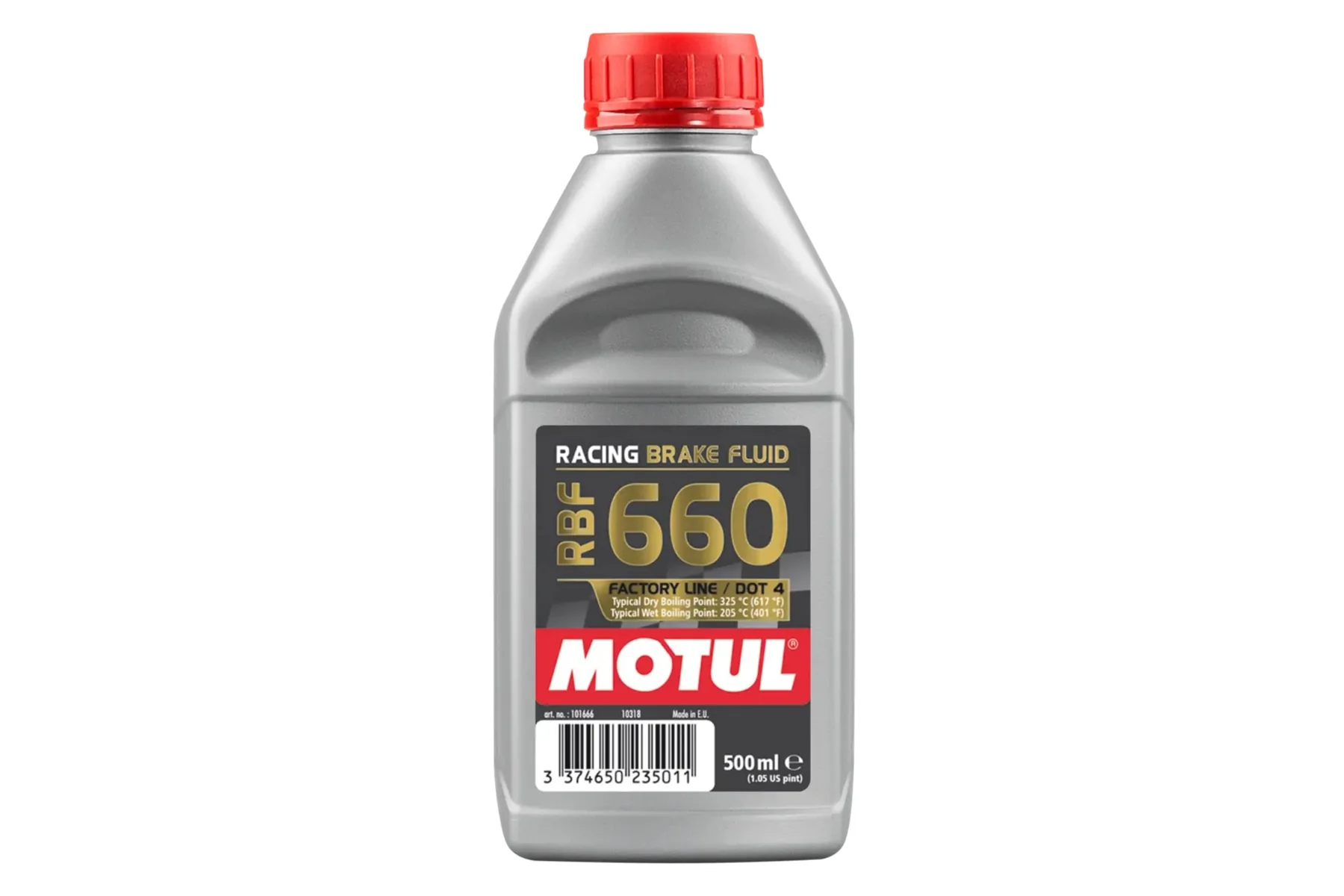
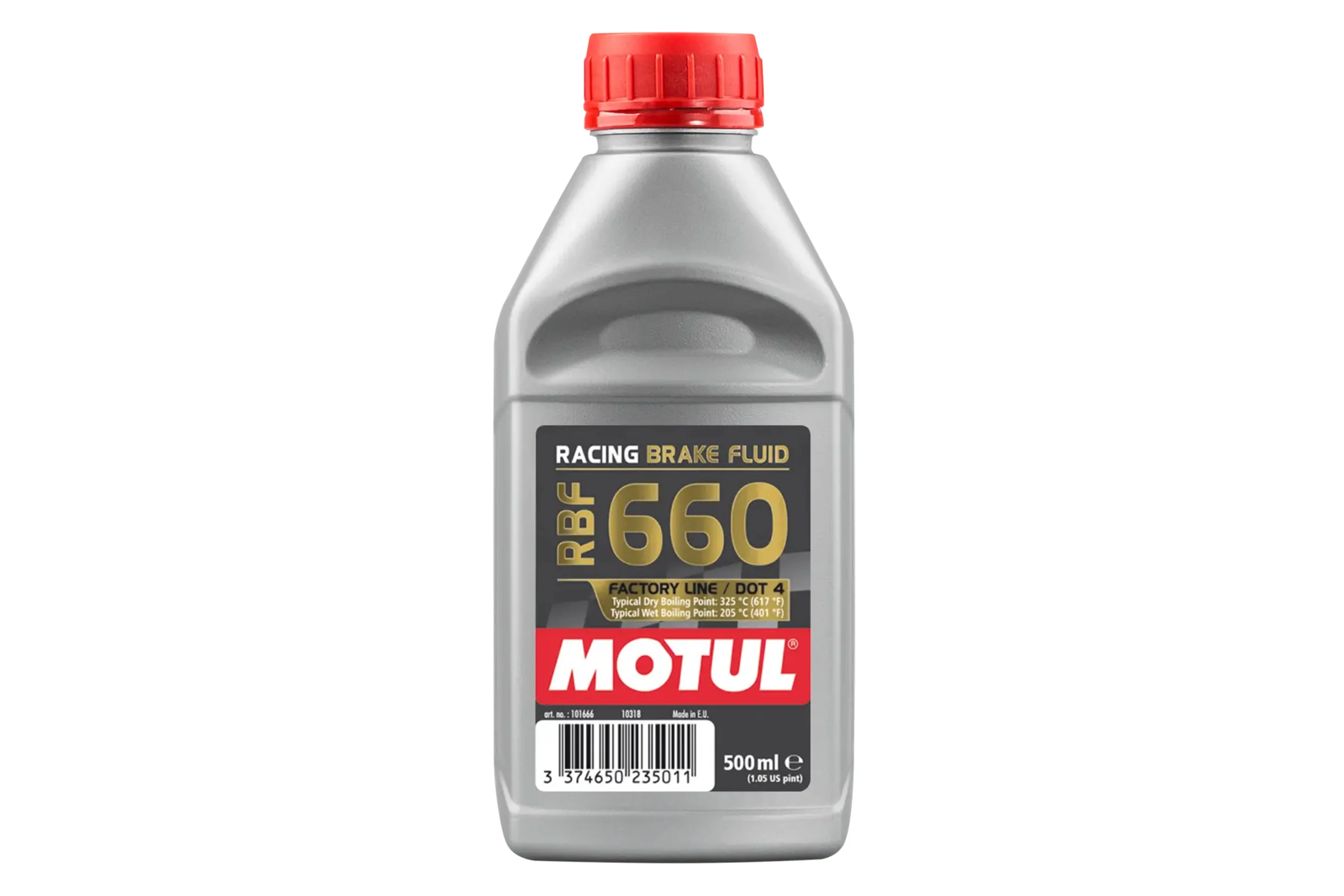
MOTUL RBF 660 FACTORY LINE RACE BRAKE FLUID
Extreme thermal resistance and stability:
MOTUL RBF 660 FACTORY LINE very high dry boiling point (325°C / 617°F) exceeds the requirements of the standards DOT 5.1 non silicone base (260°C mini / 500°F mini) and DOT 4 (230°C mini / 446°F mini), and therefore enables effective braking even in extreme conditions. Allows better aerodynamic performance by reducing the need for brake cooling air scoops on vehicles.
Efficient when rainy:
MOTUL RBF 660 FACTORY LINE very high wet boiling point (205°C / 401°F) is superior than the requirements of the standards DOT 5.1 non-silicone base (180°C mini / 356°F mini) and DOT 4 (155°C mini / 311°F mini), and therefore enables to keep efficient braking in wet conditions. Indeed, DOT 3, DOT 4 or DOT 5.1 brake fluids have the property of absorbing moisture from the air, which reduces their boiling points and increases the risk of “vapor lock” phenomena. The wet boiling point is measured after moistening the product with 3% water in order to be representative of the state of the fluid after 1 year of use.
Original: $35.06
-65%$35.06
$12.27Product Information
Product Information
Shipping & Returns
Shipping & Returns
Description
Extreme thermal resistance and stability:
MOTUL RBF 660 FACTORY LINE very high dry boiling point (325°C / 617°F) exceeds the requirements of the standards DOT 5.1 non silicone base (260°C mini / 500°F mini) and DOT 4 (230°C mini / 446°F mini), and therefore enables effective braking even in extreme conditions. Allows better aerodynamic performance by reducing the need for brake cooling air scoops on vehicles.
Efficient when rainy:
MOTUL RBF 660 FACTORY LINE very high wet boiling point (205°C / 401°F) is superior than the requirements of the standards DOT 5.1 non-silicone base (180°C mini / 356°F mini) and DOT 4 (155°C mini / 311°F mini), and therefore enables to keep efficient braking in wet conditions. Indeed, DOT 3, DOT 4 or DOT 5.1 brake fluids have the property of absorbing moisture from the air, which reduces their boiling points and increases the risk of “vapor lock” phenomena. The wet boiling point is measured after moistening the product with 3% water in order to be representative of the state of the fluid after 1 year of use.